


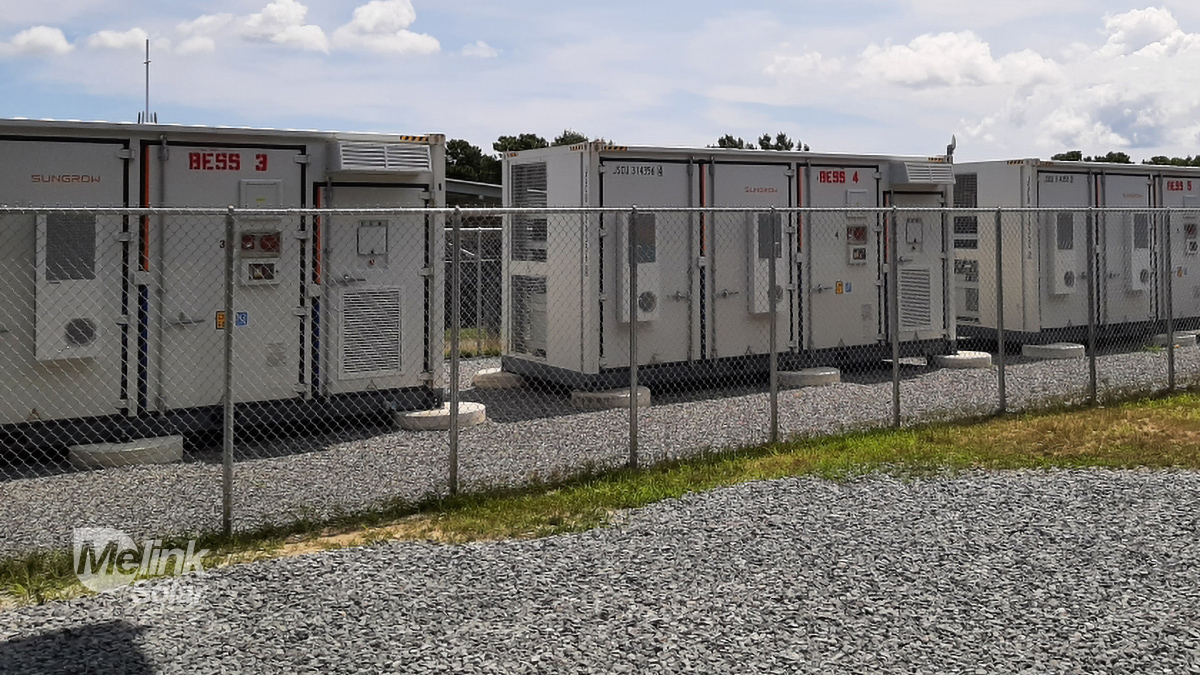
Battery storage systems, often referred to as Battery Energy Storage Systems (BESS), combined with commercial solar installations, enable organizations to store excess energy generated during the day for use at night or during peak demand hours. When evaluating battery storage solutions, it’s important to consider factors like energy needs, peak usage times, available space, and the existing solar setup (whether it’s rooftop, ground-mounted, or canopy solar).
Integrating battery storage with on-site solar allows for greater control over energy use, offering the flexibility to consume energy when it’s most cost-effective and environmentally beneficial.
At Melink Solar, we have extensive experience installing battery systems of different scales across various industries, ensuring that each solution is tailored to meet the unique energy needs and operational goals of our clients. By storing excess energy, businesses can reduce reliance on the grid, lower energy costs, and ensure a continuous power supply even when the sun isn’t shining.
An Intro to Bess
A BESS allows businesses to capture and store excess energy generated by their solar or renewable energy systems, making it available for use during non-generating hours or high-demand periods. This integration maximizes the use of clean, renewable energy, reducing reliance on the grid and helping businesses meet their sustainability goals. By storing energy when solar power is abundant, businesses can tap into that stored energy during times when the sun isn’t shining, ensuring a continuous power supply.
In addition to increasing energy independence, BESS systems can significantly lower energy costs through time-of-use optimization. Utility rates often vary throughout the day, with higher prices during peak demand hours. By storing excess energy during off-peak periods, businesses can avoid purchasing expensive electricity from the grid during peak times, leading to substantial savings. This combination of energy storage and optimized energy use makes BESS an essential tool for reducing operational costs and improving a business’s bottom line.
Operational Continuity
In addition to reducing energy costs, a BESS provides a crucial backup power solution for businesses. When the grid experiences an outage or power disruption, BESS can ensure that your business continues to operate without interruption. By automatically discharging stored energy, BESS can supply power to critical systems, protecting essential operations and preventing costly downtime.
This capability is especially valuable for businesses with sensitive operations that cannot afford any disruption—such as manufacturing plants, hospitals, data centers, or food storage facilities. In industries where every minute of downtime can result in significant losses or damage, a BESS provides peace of mind by ensuring power availability during emergencies.
Moreover, integrating BESS with a commercial solar system increases energy reliability even further. When paired with solar, BESS not only stores energy for later use but also allows your business to continue drawing from renewable energy during an outage. This dual benefit of energy storage and solar generation ensures that your facility stays powered by clean energy during critical times, enhancing both operational continuity and sustainability.
Load Shifting vs. Peak Shaving
To effectively manage energy consumption, it’s essential to understand the differences between peak shaving and load shifting. Both strategies aim to reduce energy costs, but they do so in different ways.
- Load Shifting: Focuses on the timing of energy use to capitalize on different hourly rates (kWh).
- Peak Shaving: Focuses on the magnitude of demand to avoid expensive “demand charges” (fees based on the highest amount of power, measured in kilowatts, used during a single short interval) within a billing cycle.
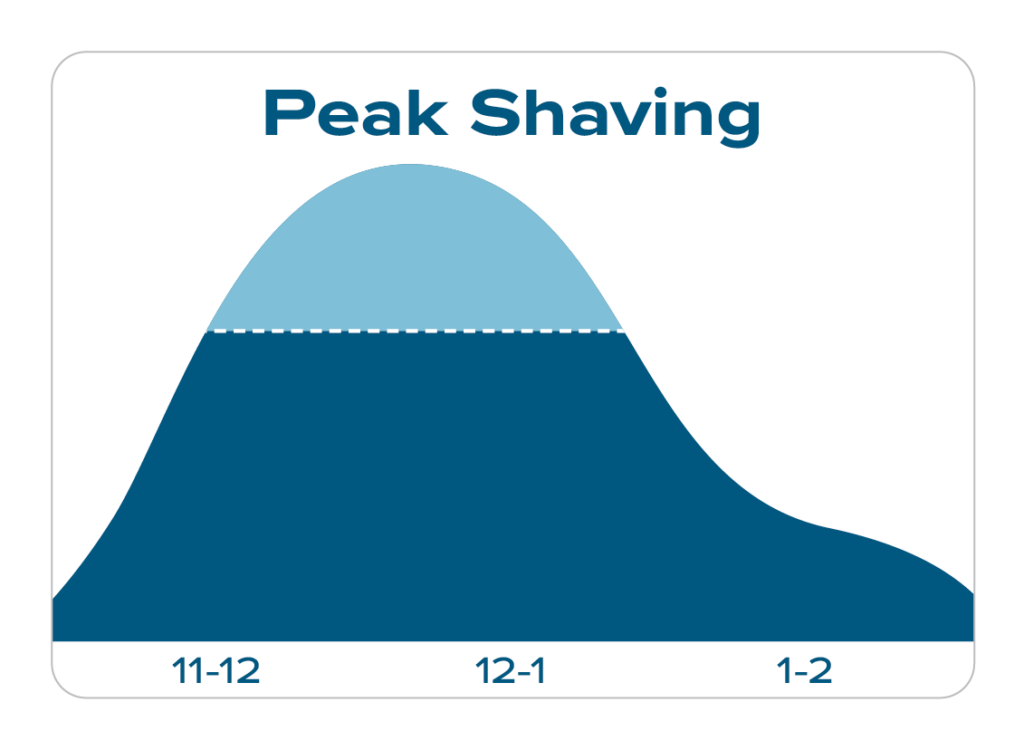
Peak Shaving
Peak shaving is a strategy focused on reducing a facility’s maximum energy demand during peak periods. This method involves either lowering energy consumption or supplementing with alternative energy sources, so the facility is not pulling power from the meter.
It’s ideal for businesses with high energy demand that experience significant demand charges. It is especially useful in scenarios where reducing peak demand can lead to considerable cost savings, such as in manufacturing plants or large commercial buildings.
How Peak Shaving Works
Peak shaving typically involves the use of on-site energy generation, such as solar panels and energy storage systems like batteries. During peak demand periods, these systems kick in to reduce the amount of energy drawn from the grid. By doing so, the facility avoids the higher demand charges that come with exceeding peak demand thresholds set by the utility company’s energy tariff.
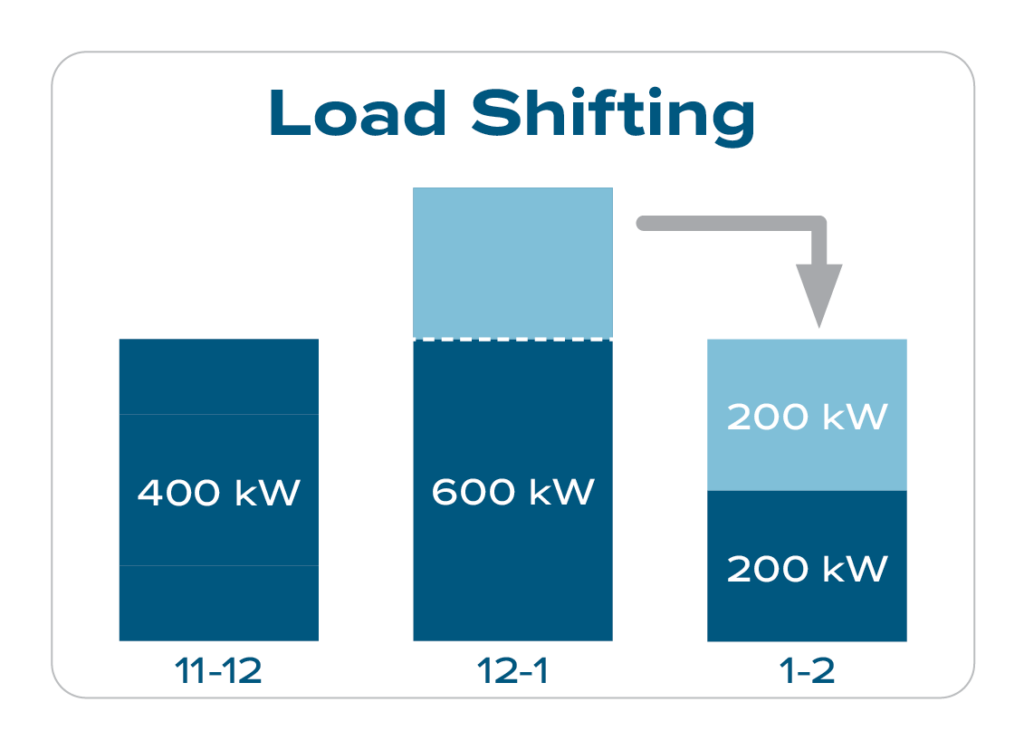
Load Shifting
Load shifting is a strategy that involves moving energy consumption from periods of high demand (and high prices) to periods of lower demand (and lower prices). This approach is particularly effective in regions with time-of-use (TOU) pricing, where electricity costs vary throughout the day.
How Load Shifting Works
Load shifting works by rescheduling energy-intensive activities to off-peak hours. For instance, a commercial laundry facility might shift its laundry processes to nighttime when energy prices are lower. In industries with flexible production schedules, this can lead to substantial savings without the need for significant infrastructure investment.
In a commercial setting, load shifting might involve running air conditioning systems or heavy machinery during the early morning or late evening hours when demand and electricity prices are lower.
Load shifting is best-suited for businesses that operate in regions with TOU pricing and have the flexibility to adjust their operations. Industries like data centers, where energy-intensive tasks can be scheduled during off-peak hours, can benefit greatly from load shifting.
As energy costs continue to evolve and grid reliability becomes increasingly important, battery energy storage is emerging as a valuable tool for businesses looking to maximize the benefits of their solar investment. Whether your goal is to reduce demand charges through peak shaving, lower electricity costs with load shifting, or improve operational resilience during outages, a well-designed BESS can help you achieve greater control over your energy future. By pairing energy storage with on-site solar generation, organizations can strengthen their financial performance, enhance sustainability efforts, and build a more resilient energy strategy for years to come.